Future of Mobility
Multimodal Transport: The Urban Mobility Future
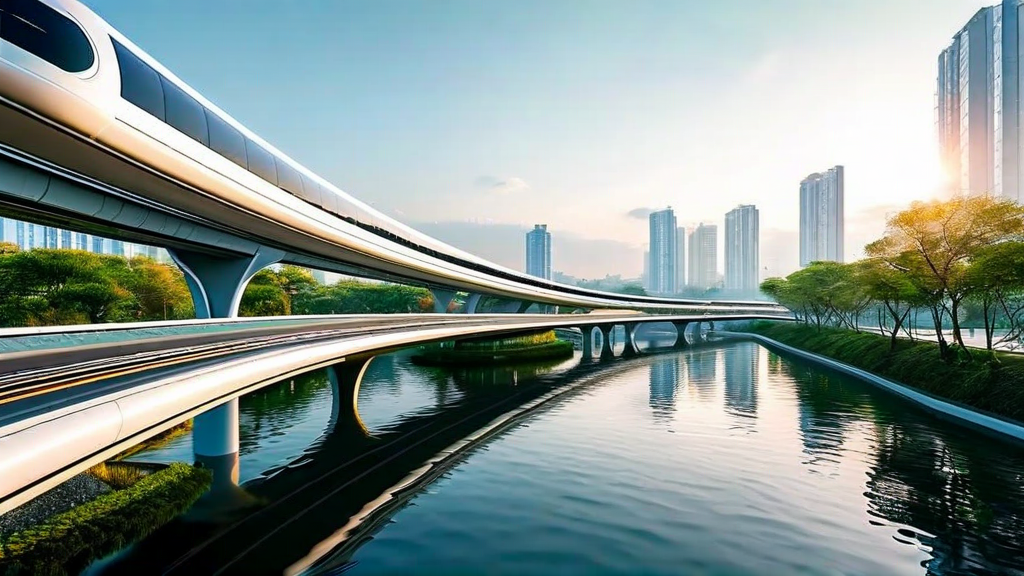
Urban mobility has historically been organized around dominant modes — the era of the automobile, the era of mass transit expansion, and most recently the era of ride-hailing. Each dominant mode has been championed as the solution to urban transportation, and each has delivered real benefits while creating new problems. Cars provide unparalleled flexibility but consume enormous road and parking space, create congestion, and generate significant emissions. Mass transit provides efficient movement of large volumes but requires density to be viable and leaves significant coverage gaps. Ride-hailing provides flexibility without parking requirements but adds vehicle kilometers traveled and contributes to urban congestion.
The emerging consensus among transportation researchers, urban planners, and progressive mobility operators is that no single mode can serve the full diversity of urban mobility needs. The future of urban transportation is multimodal — a system where walking, cycling, micromobility, ride-hailing, buses, metro, and suburban rail are designed to work together as a coherent system, each mode serving the trips it does most efficiently, with seamless connections between them that make the system more than the sum of its parts.
Why Single-Mode Solutions Fail
Understanding why multimodal integration is necessary requires examining why single-mode solutions have fallen short. The automobile's failures in urban contexts are well-documented: traffic congestion in major Indian cities costs an estimated $22 billion annually in lost productivity; vehicle emissions are a major contributor to urban air pollution that kills over 100,000 Indians per year; and the land consumption of roads and parking consumes 30–40% of urban land in car-dominated cities, reducing the density that makes other urban services economically viable.
Public transit, despite massive investment, struggles to achieve the coverage density needed to serve dispersed urban trip patterns. Metro systems in Indian cities carry 2–8 million passengers per day but serve primarily linear corridors — the spatial geometry of a metro line serves riders who live and work near stations, but cannot serve the vast majority of trips between points that are not well-aligned with the corridor geometry. Bus networks offer broader coverage but face the chicken-and-egg problem of needing frequency and reliability to attract riders, while needing ridership revenue to fund frequency and reliability.
Ride-hailing filled a critical gap in this landscape — providing flexible, on-demand mobility that reaches any origin and destination regardless of proximity to transit infrastructure. But ride-hailing as a replacement for other modes, rather than a complement to them, generates more vehicle kilometers traveled per person-trip than the transit modes it displaces, contributing to the congestion and emissions problems that cities are trying to solve.
The Multimodal System Architecture
Effective multimodal transport systems share several architectural features. First, they have clear mode-role assignments: each mode serves the trip types it handles most efficiently. Metro and BRT serve high-volume corridors with predictable origin-destination patterns. Buses serve area coverage with flexible routing. Ride-hailing and micromobility serve first/last-mile connectivity and off-corridor trips. Walking serves short distances in pedestrian-friendly environments. These roles are not rigidly fixed — they evolve with urban development, demand patterns, and technology — but having clarity about them enables each mode to be designed and operated for its primary purpose.
Second, effective multimodal systems have seamless connections. The friction at modal transfer points — waiting, navigating, paying again, uncertainty about the next mode — is the primary barrier to multimodal travel adoption. Minimizing this friction requires integrated journey planning, unified payment, physical infrastructure design that places connection points where transfers naturally occur, and real-time information that allows travelers to adapt when planned connections are disrupted.
Third, multimodal systems require genuine data sharing among operators. Journey planning that optimizes across modes requires real-time data from all participating systems — bus locations and delays, metro schedules, ride-hailing availability, cycling infrastructure status. This data sharing is technically straightforward but requires organizational agreements, compatible data standards, and mutual commitment to service interoperability that goes against the natural competitive instincts of private operators.
Namma Yatri's Multimodal Vision
Namma Yatri's long-term platform vision is explicitly multimodal. Our current ride-hailing operations in Bengaluru are the foundation, but our product roadmap includes integration with every major mobility mode operating in our cities. The transit integration pilots we have described in previous articles — connecting our auto-rickshaw network with BMTC bus routes — are the first practical implementation of this vision.
Our Multimodal Journey Planning feature, currently in beta with 2,000 test users, allows riders to enter an origin and destination and receive route options that may combine auto-rickshaw, bus, metro, and walking segments. The options are ranked by a combination of travel time, cost, and carbon footprint — three metrics that reflect what research suggests riders actually value when choosing how to travel. The integrated booking flow allows the entire journey to be confirmed in a single transaction, with the Namma Yatri portion pre-booked and partner transit segments handled through existing transit passes or a unified payment system.
Early data from the beta is encouraging. Users who engage with multimodal journey suggestions complete their trips in 9% less time on average compared to auto-only journeys, at 22% lower cost, and with 31% lower carbon emissions. These are preliminary numbers from a small sample, but they suggest the potential scale of benefit when multimodal integration is actually seamless rather than theoretical.
Equity in Multimodal Design
Multimodal transport systems have significant equity potential — they can provide high-quality mobility access without requiring private vehicle ownership, which is particularly important for the 60-70% of Indian urban households that do not own cars. But realizing this potential requires deliberate design choices that prioritize universal access over efficiency optimization for high-demand segments.
Key equity dimensions include: payment accessibility — integrated payment systems must accommodate cash users, not just app-based digital payments; physical accessibility — multimodal connections must be navigable for people with disabilities and the elderly; digital accessibility — journey planning tools must work on basic smartphones with limited data connectivity; and geographic equity — multimodal infrastructure investment must extend to lower-income areas, not concentrate in commercial and affluent districts.
Namma Yatri's open data commitments support equity advocacy by making service accessibility data available to civil society organizations monitoring equity outcomes. Our driver community in lower-income residential areas gives us better service coverage in these neighborhoods than pure demand-response would produce, because our driver-partners live there and know these communities. This is a genuine competitive advantage of community-embedded operations over platforms that treat coverage purely as a demand optimization problem.
The Role of Policy in Enabling Multimodal Systems
Private platforms can build multimodal capabilities, but realizing their full potential requires enabling policy frameworks. Several policy interventions are particularly valuable: unified mobility accounts that allow a single payment credential to work across all public and private mobility modes, reducing payment friction at transfer points; open data mandates requiring all publicly licensed mobility operators to share real-time service data in standard formats, enabling third-party journey planners to provide genuine multimodal options; and regulatory frameworks that recognize and reward multimodal trip facilitation, rather than treating ride-hailing as a standalone category.
India has the opportunity to design multimodal policy frameworks that avoid the fragmentation that has hampered Western cities. The relative youth of India's mobility ecosystem — including digital payment infrastructure through UPI, a rapidly expanding metro network, and a ride-hailing industry that is still maturing — creates policy windows for integrated design that are more difficult to open in markets where legacy systems are deeply entrenched.
Key Takeaways
- No single transport mode can serve the full diversity of urban mobility needs — multimodal systems outperform single-mode solutions across cost, time, and sustainability metrics
- The future of urban transport is a designed system where each mode serves trips it handles most efficiently, with seamless connections between modes
- Beta data shows multimodal integrated journeys deliver 9% faster trips, 22% lower cost, and 31% lower emissions compared to single-mode auto trips
- Equity requires deliberate design: cash payment support, physical accessibility, basic smartphone compatibility, and geographic coverage of lower-income areas
- Open data mandates and unified payment infrastructure are the most impactful policy interventions to enable genuine multimodal integration
- India's relatively young mobility infrastructure creates design windows for integrated systems that are harder to open in mature markets
Conclusion
The urban mobility future is not a single app, a single company, or a single mode — it is a thoughtfully designed system of complementary modes connected by seamless information and payment infrastructure, serving every urban resident's mobility needs regardless of their income, location, or physical capabilities. Building toward that future requires platform operators, transit authorities, municipal governments, and technology developers to see themselves as collaborators in a shared infrastructure project rather than competitors for transportation market share. Namma Yatri is committed to playing our part in that collaboration — building the integrations, sharing the data, and making the platform decisions that contribute to a multimodal future rather than defending a single-mode position. The city that moves best is the city that moves as a system.